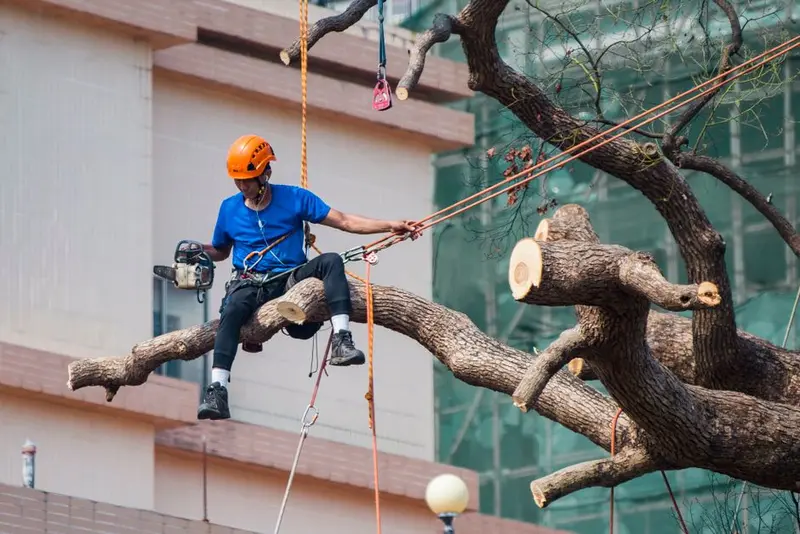
ANSI A300 (Part 1) pruning types
| Pruning type | Purpose | Typical use |
|---|---|---|
| Crown cleaning | Remove dead, dying, diseased, broken and crossing branches | Every mature tree on a 3–5 year cycle |
| Crown thinning | Selectively remove live branches to reduce density and wind load | Dense canopies, storm preparation |
| Crown raising | Remove lower limbs for clearance | Walks, drive aisles, signage and building sight-lines |
| Crown reduction | Reduce height or spread by cutting back to a lateral large enough to take over | Clearance from structures and utilities |
Write “no topping” into the contract. Topping (cutting leaders back to stubs) triggers decay and weak regrowth, and is a common sign of an unqualified crew.
Arborist specifications
- Work supervised by an ISA Certified Arborist
- Pruning specified by ANSI A300 type and objective, not “trim trees”
- No climbing spikes on trees being pruned (removals only)
- Maximum live-crown removal per cycle stated (commonly no more than 25%)
- Tree inventory and risk notes for the board or owner
Multi-year enhancement planning
HOA boards and owners get better results when enhancements are planned as capital projects, separate from the maintenance contract and tied to the reserve study.
| Enhancement | Why it pays | Planning note |
|---|---|---|
| Entry monument refresh | First impression for residents, tenants and buyers | Replace aged shrubs, add lighting, refresh signage beds |
| Turf-to-native bed conversion | Lower water and mowing cost; rebate-eligible in many western markets | Pre-approval before removal; drip conversion |
| Drainage corrections | Stops ponding, turf loss and hardscape heave | Regrade, French drains, catch basins |
| Seasonal color rotations | High-visibility entries and amenity areas | 2–3 rotations per year in focal beds |
| Tree replacement program | Keeps canopy age diverse | Plant replacements before removals where possible |
Enhancement labor commonly runs $40–$80 per worker-hour plus materials.