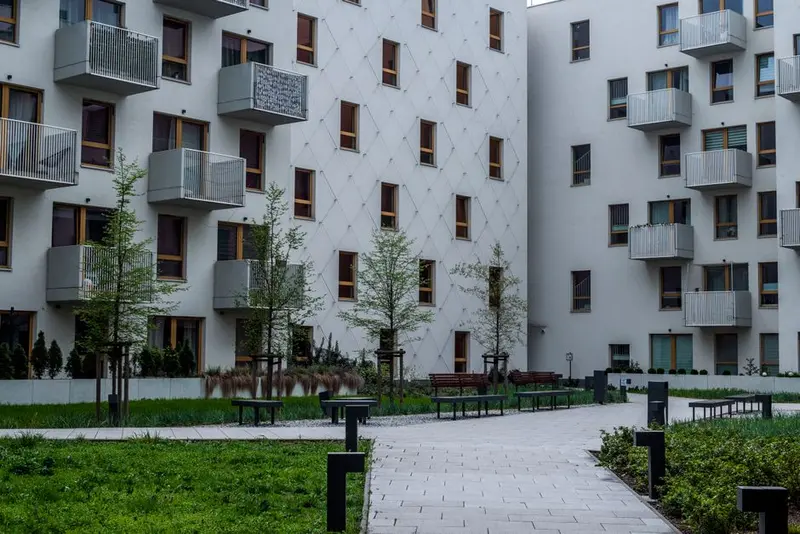
Budget realities
| Community profile | Typical annual grounds budget |
|---|---|
| Small townhome or condo association (1–3 landscaped acres) | $20,000–$45,000 |
| Mid-size community (4–8 acres, entry, pool, common turf) | $45,000–$60,000+ |
| Large amenity-rich or master-planned community | $150,000–$250,000+ |
On a per-acre basis HOAs sit in the middle-to-upper part of the commercial range because of entry beds, amenity areas, many small turf panels and resident expectations. Our estimator applies a 1.10× intensity factor for HOA and multifamily sites.
Operating maintenance vs. reserve-study capital
Keep the recurring contract and capital work in separate budgets:
Operating (annual contract)
- Mowing, edging, blowing
- Bed weeding and annual mulch
- Fertilization and weed control
- Shrub pruning, cleanups
- Irrigation monitoring
Capital (reserve study)
- Tree replacement and major pruning cycles
- Irrigation system and controller replacement
- Entry and amenity renovations
- Turf conversion and drainage projects
- Retaining wall and hardscape repairs
Fewer resident complaints
- Publish the mowing schedule and service days to residents
- Require digital visit slips the manager can share with the board
- Set a response time for resident-reported issues
- Monthly or quarterly walkthroughs with the account manager
- Define what “in season” means by month
Lower the water bill
Irrigation is often the largest landscape line after the contract itself. A distribution-uniformity audit, head repairs and EPA WaterSense smart controllers routinely cut outdoor water use by 20% or more; in rebate markets, converting non-functional turf can be partly paid for by the water agency. See irrigation & water management.
Multi-year contracts
A 2–3 year term with a stated annual escalator (or a fixed price) protects the association from labor-cost swings and gives the contractor a reason to invest in your site. Include a 30–60 day termination-for-cause clause tied to documented service failures.